
Speedy Week Night Gut Loving Curry
Jun 11, 2026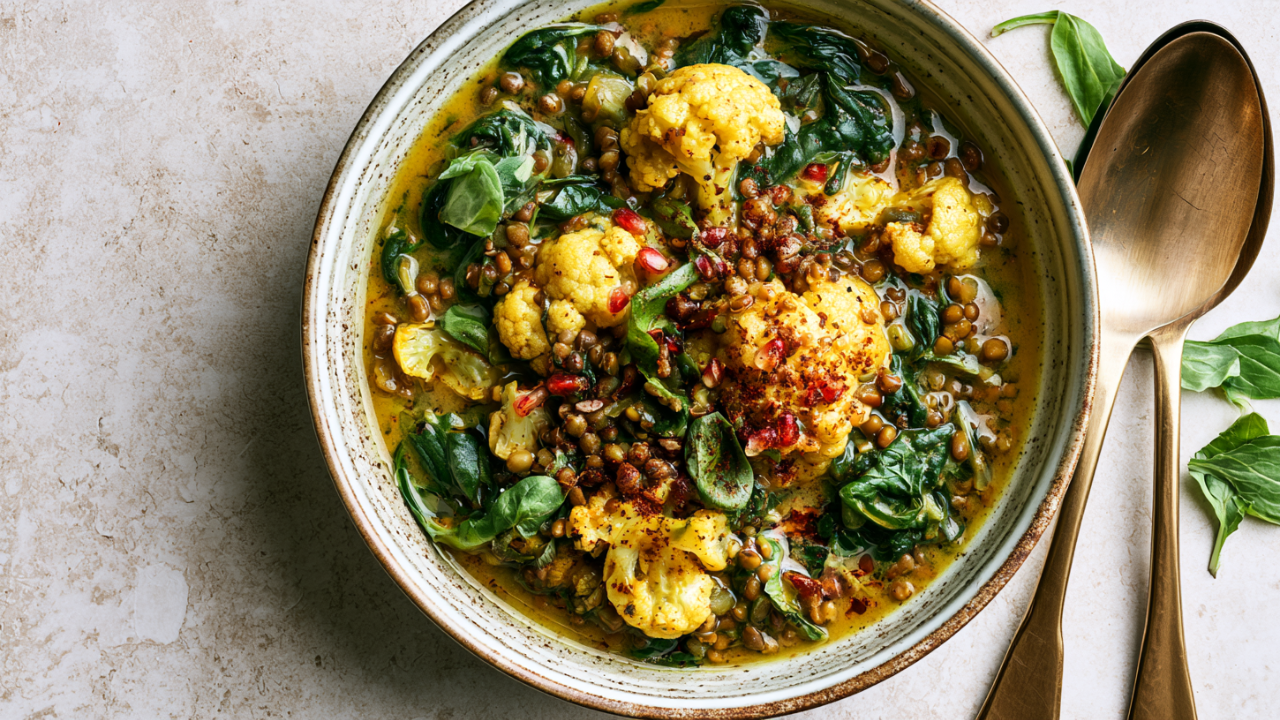
This hearty plant-based curry combines fibre-rich green lentils, cruciferous vegetables, leafy greens, warming spices, and healthy fats into a dish that is exceptionally nutrient-dense and supportive of overall health. It provides a broad spectrum of vitamins, minerals, polyphenols, carotenoids, and anti-inflammatory compounds while delivering substantial protein and fibre to support metabolic health, gut health, and satiety.
Ingredients
- 2 tbsp extra virgin olive oil
- 1 large onion, finely diced
- 4 garlic cloves, crushed
- 20g fresh ginger, grated
- 1 tsp ground turmeric
- 2 tsp ground cumin
- 2 tsp ground coriander
- ½ tsp chilli flakes (optional)
- 200g dried green lentils
- 1 medium cauliflower, cut into florets
- 400ml tin coconut milk
- 600ml vegetable stock
- 150g baby spinach
- Juice of 1 lime
- Sea salt and black pepper to taste
- Small handful fresh coriander, roughly chopped
Method
Heat the olive oil in a large saucepan or casserole dish over a medium heat. Add the onion and cook gently for around 6–8 minutes until softened and lightly golden.
Stir in the garlic and ginger and cook for a further minute until fragrant.
Add the turmeric, cumin, coriander and chilli flakes, stirring continuously for around 30 seconds to allow the spices to release their aromatic oils.
Add the green lentils and cauliflower florets, stirring well to coat them in the spice mixture.
Pour in the coconut milk and vegetable stock. Bring to a gentle simmer, then reduce the heat and cook uncovered for approximately 30–35 minutes, stirring occasionally, until the lentils are tender and the cauliflower is soft but still holding its shape.
Add the spinach during the final 2–3 minutes of cooking and stir until wilted into the curry.
Remove from the heat and stir through the lime juice. Season generously with sea salt and black pepper.
Scatter over the fresh coriander before serving.
Why This Curry Is So Good For You
Green Lentils
Green lentils are one of the most nutritionally impressive legumes. They provide significant amounts of plant protein and soluble fibre, helping to stabilise blood sugar levels, improve satiety, and support healthy cholesterol metabolism. Their resistant starch and fermentable fibres act as prebiotics, feeding beneficial gut bacteria which in turn produce short-chain fatty acids such as butyrate, important for gut integrity and immune regulation.
They are also rich in folate, magnesium, iron, zinc, and numerous polyphenols that possess antioxidant and anti-inflammatory properties.
Cauliflower
As a member of the cruciferous vegetable family, cauliflower contains glucosinolates, which are converted into biologically active compounds called isothiocyanates during digestion. One of the best studied is sulforaphane, known for supporting the body's detoxification pathways, antioxidant defence systems, and cellular protection mechanisms.
Cauliflower is also a valuable source of vitamin C, fibre, and numerous phytonutrients associated with reduced risk of chronic disease.
Spinach
Spinach provides folate, vitamin K, magnesium, potassium, vitamin C, and carotenoids such as lutein and zeaxanthin, which support eye health and help protect tissues against oxidative stress.
Its nitrate content may also support healthy blood vessel function and circulation through nitric oxide production.
Turmeric
Turmeric contains curcumin, one of the most extensively researched anti-inflammatory phytochemicals. Curcumin influences numerous inflammatory signalling pathways and has been studied for its potential role in supporting joint health, cardiovascular health, metabolic function, and healthy ageing.
Ginger
Ginger contains gingerols and shogaols, compounds known to possess anti-inflammatory, antioxidant, digestive-supportive, and anti-nausea properties. It may help support healthy digestion and gastrointestinal comfort.
Garlic
Garlic contains sulphur compounds such as allicin, which have demonstrated antimicrobial, cardioprotective, and immune-supportive properties. Regular garlic consumption is associated with improvements in cardiovascular risk markers and overall health.
Coconut Milk
While coconut milk is rich in saturated fat, much of this comes from medium-chain triglycerides (MCTs), which are metabolised differently from longer-chain fats. It contributes creaminess, satiety, and flavour while helping improve absorption of fat-soluble phytonutrients present in the vegetables and spices.
Coriander
Fresh coriander provides vitamin C, vitamin K, and numerous aromatic compounds with antioxidant activity. It contributes freshness and complexity while adding further phytonutrient diversity to the meal.
Interested in nutrition? You'll love this.
New research. Emerging ideas. Fascinating physiology. And a proper look at what the science actually means — without the hype.
Join my newsletter for weekly nutrition research, recipes, articles and insights worth knowing about.