
Same Calories, Same Macros — So Why Did the Ultra-Processed Meal Produce a Different Metabolic Response
Oct 06, 2026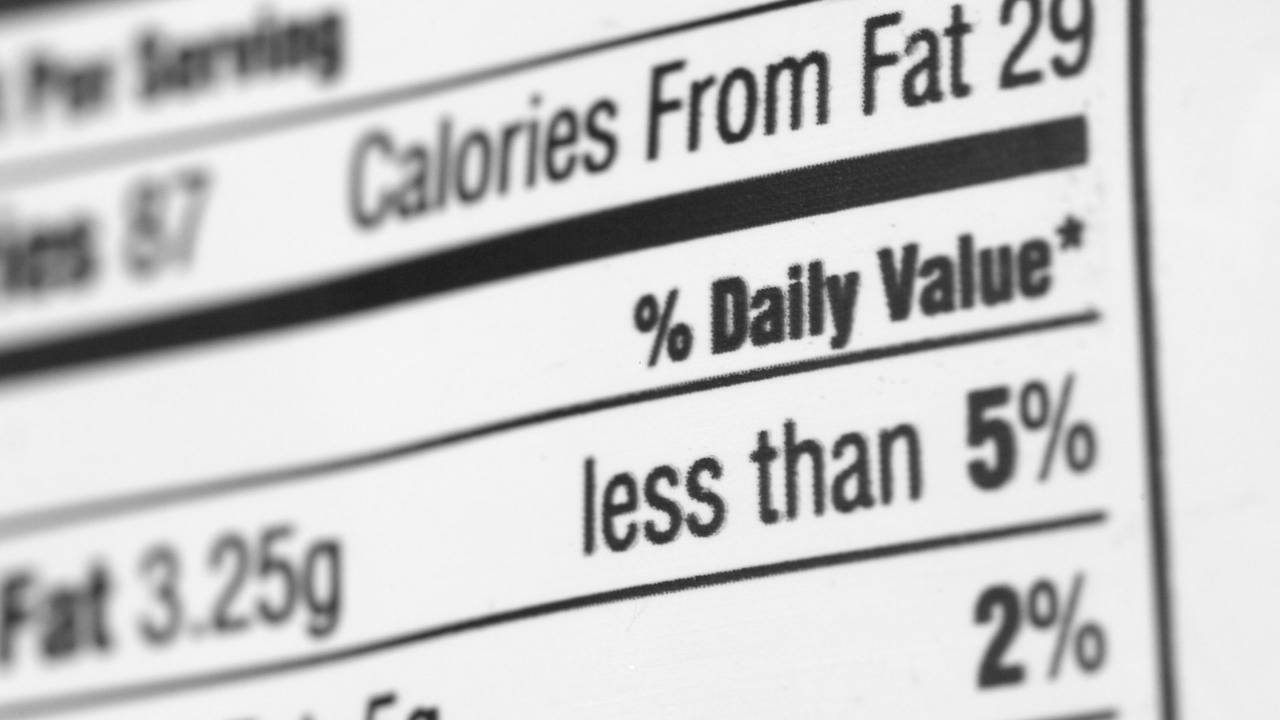
For decades, we have largely described food by breaking it down into its constituent parts. Calories, protein, carbohydrate, fat, fibre, vitamins and minerals are measured, printed neatly on the back of the packet and used to tell us something about the nutritional value of what we are about to eat.
This is obviously useful. I am certainly not about to suggest that calories or nutrients have suddenly become irrelevant because somebody has discovered the food matrix. But, you also know I have questioned the black and white nature of it for quite some time now.
Energy still matters. Protein is still protein. Fibre remains rather useful stuff. But there is a growing body of research suggesting that this reductionist view of food only tells us part of the story.
Two foods can contain very similar amounts of energy, carbohydrate, fat and protein yet behave differently once they enter the digestive system. The physical structure of the food can influence how quickly nutrients become available, how efficiently they are absorbed, how rapidly we eat them and potentially even the hormonal and neural responses that follow.
A fascinating new experiment has just demonstrated this rather beautifully.
Researchers gave people an ultra-processed meal and a non-ultra-processed meal that had been painstakingly matched for almost everything we would normally look for on a nutrition label. Energy, meal weight, energy density, protein, carbohydrate, fat, available carbohydrate, glycaemic index, glycaemic load, fibre, sodium and water were all matched to within 1.6%.
On paper, metabolically speaking, you might expect the body to shrug its shoulders and treat them much the same.
It didn't.
Two nutritionally similar meals produced different responses
The randomised controlled crossover study, published in Nature Metabolism, recruited healthy-weight adults who consumed both meals on separate occasions, allowing the researchers to compare each person's response to the ultra-processed and non-ultra-processed versions.
The glucose results were interesting in themselves. Overall glucose exposure, measured as area under the curve, was not significantly different between the meals. Blood glucose actually rose slightly faster initially after the non-ultra-processed meal, before following a different trajectory over the following hours.
Insulin told a rather different story.
Despite the similar overall glucose exposure, the ultra-processed meal produced a significantly greater insulin response. Insulin concentrations were higher between approximately 40 and 120 minutes after eating the ultra-processed meal, before both conditions returned towards baseline by three hours.
That distinction matters. The experiment did not simply show that the ultra-processed food caused a gigantic glucose spike while the minimally processed food produced a beautifully flat glucose curve. It didn't. The interesting finding was that the body appeared to produce substantially more insulin in response to a meal containing very similar quantities of available carbohydrate and with a very similar predicted glycaemic effect.
Differences were also observed in post-meal energy metabolism and substrate oxidation. The meals altered respiratory exchange ratio and the relative oxidation of carbohydrate and fat, suggesting that the metabolic handling of the incoming nutrients differed despite their similar nutritional composition.
The researchers then looked at the brain.
Using functional MRI, they examined responses to images of ultra-processed and non-ultra-processed foods after the meal. Differences in post-meal carbohydrate metabolism were associated with activity within brain regions involved in food-cue processing and reward, including parts of the striatum.
That does not mean an ultra-processed sandwich somehow hijacks the brain after lunch. Brain-imaging studies are considerably easier to sensationalise than they are to interpret. What it does suggest is that the physiological response occurring after food reaches the gut may interact with neural systems involved in how food is subsequently perceived and valued.
That takes us into some extremely interesting territory.
A calorie is still a calorie — but a food is not simply a collection of calories
This is where nutrition conversations have a habit of disappearing into two opposing camps.
One side hears results like these and declares that calories no longer matter. The other responds that the laws of thermodynamics have not been repealed and therefore the structure of food cannot possibly be important.
Both positions miss the point.
A kilocalorie remains a unit of energy. The human body does not possess a small committee capable of voting to suspend thermodynamics after encountering an organic lentil. But knowing the theoretical energy content of a food does not tell us everything about how easily that energy becomes biologically accessible, how quickly nutrients enter circulation, how much digestive work is required, how rapidly the food can be consumed or how strongly it influences appetite.
Food is not poured into us as purified carbohydrate, protein and fat.
It arrives packaged inside structures.
Plants contain cells surrounded by walls made from complex carbohydrates. Starch exists within granules and cellular structures. Fats can be contained within intact plant cells or dispersed as tiny droplets within emulsions. Proteins exist within complex three-dimensional structures and interact with fats, carbohydrates and minerals. Cooking, grinding, extrusion, homogenisation and other forms of processing can alter these structures considerably.
Digestion therefore involves much more than simply identifying how many grams of each nutrient are present. The digestive system first has to gain access to them.
This concept is often described as the food matrix.
What exactly is the food matrix?
The food matrix describes the physical and chemical structure within which nutrients are contained and the interactions occurring between those nutrients and structural components.
Think about an almond.
A nutritional database can tell us how much fat an almond contains. What it cannot tell us quite so easily is whether every molecule of that fat is immediately available to digestive enzymes.
Much of the lipid within an intact almond is stored inside plant cells surrounded by cell walls. Chewing fractures some of those cells, but not all of them. Microscopy studies have demonstrated that intact almond cells can pass surprisingly far through the digestive tract while still containing lipid.
The fat is present. It has not disappeared. But some of it remains physically inaccessible to digestive enzymes.
Break the structure apart more thoroughly and the situation changes.
Grinding almonds into smaller particles ruptures more cells, increasing the surface area exposed to digestion and making more of the intracellular lipid accessible. Studies examining almond structure have repeatedly shown that particle size and cellular integrity influence lipid release during digestion.
This is a wonderful illustration of why the chemical composition of a food and the biological availability of its nutrients are not necessarily identical things.
The digestive tract cannot absorb a nutrient merely because a laboratory has established that it exists.
It has to reach it first.
The almond experiment shows just how large the effect can be
Human experiments have demonstrated that these structural differences are large enough to alter what appears in the bloodstream.
In a randomised crossover trial, researchers compared meals containing whole almond particles with meals in which a similar quantity of lipid was provided in a much more accessible form as almond oil alongside defatted almond flour.
The whole-almond meal produced a dramatically smaller post-meal triglyceride response. The incremental triglyceride area under the curve was 74% lower than after the almond-oil meal.
The difference was not because the fat inside the almond had somehow become metabolically virtuous. Much of it was simply harder to access.
Plant cell walls had physically encapsulated some of the lipid.
This concept is known as nutrient bioaccessibility: the proportion of a nutrient released from the food matrix during digestion and therefore available for absorption.
Bioaccessibility is subtly different from simply asking how much of a nutrient a food contains.
That distinction becomes increasingly important as we compare intact foods with increasingly disrupted versions of them.
The same principle applies to carbohydrate
Starch provides another excellent example.
We often talk about carbohydrate as though all starch molecules arrive at the small intestine in identical circumstances. In reality, their accessibility to digestive enzymes depends heavily upon food structure.
Starch may remain trapped within intact plant cells. Its crystalline structure can vary. Cooking can gelatinise starch, making it more accessible to digestive enzymes. Cooling cooked starch can cause some of it to retrograde into structures that resist digestion. Particle size can change the surface area available to enzymes. The ratio of amylose to amylopectin also influences digestion.
A systematic review and meta-analysis of 25 randomised crossover trials examined precisely this question.
The researchers found that several structural characteristics influenced post-meal glucose and insulin responses. Higher amylose content, less gelatinised starch and larger or more intact food particles were associated with smaller postprandial glucose and insulin responses.
Again, the carbohydrate had not ceased to exist.
Its physical presentation to the digestive system had changed.
Imagine eating an intact grain containing starch enclosed within relatively preserved cellular structures and compare that with the same grain milled into an extremely fine flour, hydrated and cooked.
The nutrition label may report similar quantities of carbohydrate.
The digestive challenge is not necessarily the same.
Processing is not automatically the enemy
At this point it is extremely important not to make the mistake of turning “food structure” into yet another simplistic rule that processing is inherently harmful.
Human beings have processed food for thousands of years, and thank goodness we did. Cooking improves safety, destroys pathogens, makes many foods edible and can dramatically improve the bioavailability of nutrients. Grinding, fermenting, soaking and heating can all provide nutritional advantages.
Sometimes greater nutrient accessibility is exactly what we want.
A particularly elegant human crossover experiment illustrated this by giving participants foods made from almost identical ingredients but arranged into different physical structures: custard, pudding, sponge cake and biscuit.
The structure of those foods altered the appearance of triglycerides and vitamin D in the circulation. Post-meal triglyceride responses differed markedly between matrices, while vitamin D absorption also varied and its peak appearance was delayed in the more structurally compact biscuit matrix.
The nutrients were essentially the same.
Their journey through digestion was not.
This is why simply declaring processing either “good” or “bad” is not particularly helpful. The relevant question is what the processing has actually done to the food.
Has it ruptured cellular structures? Altered particle size? Gelatinised starch? Changed viscosity? Created an emulsion? Removed structural fibre? Increased nutrient accessibility? Softened the texture? Increased eating rate?
Those are biological questions.
The word “processed” on its own cannot answer them.
Texture changes how quickly we eat
Food structure can influence metabolism before digestion has even properly begun because structure determines texture, and texture strongly influences eating rate.
Soft foods requiring little chewing can generally be consumed much more rapidly than harder, more structurally complex foods.
This sounds almost laughably obvious until you consider its metabolic consequences.
The body's appetite-regulation system does not operate instantaneously. As food enters the gastrointestinal tract, mechanical distension and nutrient sensing contribute to a series of neural and hormonal signals involving the vagus nerve and gut-derived peptides including GLP-1, peptide YY and cholecystokinin.
These processes contribute to satiation: the sequence of signals that eventually helps bring a meal to an end.
If a food allows considerably more energy to be consumed before those signals have had time to develop, meal size can increase without anybody consciously deciding to overeat.
A 2026 randomised controlled crossover trial tested this directly using two diets in which approximately 95% of energy came from ultra-processed foods. Rather than comparing ultra-processed foods with minimally processed foods, the researchers altered the textures of the UPF diets to produce either faster or slower eating rates.
Over two weeks, participants consumed an average of 369 fewer kilocalories per day when eating the slower-eating-rate UPF diet.
That is an extraordinarily useful finding because it tells us that the category “ultra-processed” does not fully explain eating behaviour. Characteristics within that category matter.
A soft, rapidly consumed food and a firmer food requiring substantially more oral processing may both satisfy the technical definition of ultra-processed food while producing different effects on how much is eaten.
This is one reason I am wary of discussions that treat every food in NOVA category 4 as though it has an identical biological effect.
Physiology rarely respects our filing systems quite that obediently.
This may help explain one of the most famous ultra-processed-food experiments
In 2019, Kevin Hall and colleagues at the US National Institutes of Health performed one of the most important controlled feeding experiments in this field.
Twenty adults lived within an inpatient research facility and were given either an ultra-processed or unprocessed diet for two weeks before crossing over to the alternative diet. The diets presented to participants were matched for several major nutritional characteristics, and people were allowed to eat as much or as little as they wanted.
During the ultra-processed phase, participants consumed approximately 500 additional kilocalories per day and gained weight. During the unprocessed phase, they lost weight.
The study provided unusually strong experimental evidence that something about the ultra-processed dietary environment could drive greater spontaneous energy intake.
What it could not establish was precisely what.
Was it processing itself? Energy density? Texture? Eating rate? Food structure? Palatability? Nutrient availability? Some combination of several factors?
Subsequent research has increasingly suggested that there may not be one magical “UPF mechanism”.
The faster eating rates often enabled by softer food textures appear to be one important component. Energy density matters. Hyperpalatable combinations may matter. Food structure and nutrient accessibility may matter. The displacement of intact whole foods certainly matters at dietary-pattern level.
And now the new Nature Metabolism experiment suggests that differences may remain even when many of the obvious nutritional characteristics are deliberately matched.
That does not settle the UPF debate.
It makes it more interesting.
So why did the new ultra-processed meal require more insulin?
This is the question the latest study raises rather than definitively answers.
Both meals produced similar overall glucose exposure, yet the ultra-processed meal generated a substantially larger insulin response.
One plausible explanation is altered nutritional availability.
If processing changes particle size, cellular structure, starch accessibility, protein structure or the physical relationships between nutrients, digestion may deliver substrates to the intestine at different rates even when the total quantity of those substrates is similar.
Insulin secretion is influenced by much more than the final glucose concentration measured in peripheral blood.
The rate at which nutrients appear in the gut matters. Amino acids can stimulate insulin secretion. Gastrointestinal nutrient sensing triggers incretin hormones including GLP-1 and GIP, which amplify glucose-dependent insulin secretion. Gastric emptying influences how rapidly nutrients reach the small intestine. The physical form of a meal can therefore alter the sequence of physiological events occurring between swallowing food and measuring glucose in the bloodstream.
This does not mean the new study has established which of these mechanisms caused the higher insulin response.
It hasn't.
The ultra-processed and non-ultra-processed meals contained different foods and different protein sources. They also differed in additives and inevitably in structural characteristics that cannot be represented by a standard nutrition label. The researchers themselves acknowledge that these differences make it impossible to attribute the result to one specific property of processing.
That limitation is crucial.
We should not take an experiment showing different responses to two differently structured meals and conclude that an invisible substance called “processing” has independently caused insulin resistance.
What we can conclude is much more defensible and, in my view, considerably more interesting: matching foods for calories and conventional nutrient composition does not necessarily make them physiologically identical.
The nutrition label describes composition, not architecture
This is perhaps the simplest way to understand the food-matrix concept.
A nutrition label tells us largely what is there.
It tells us much less about how it is arranged.
Consider two buildings constructed from identical quantities of bricks, steel, glass and concrete. A list of the materials would tell us something useful about both buildings, but it would not tell us whether one was a bungalow and the other a multi-storey car park.
Structure changes function.
Food is no different.
Two foods containing identical quantities of fat can release that fat at different rates because one retains intact cellular structures while another has been thoroughly disrupted.
Two foods containing similar quantities of starch can produce different glycaemic responses because particle size, starch gelatinisation and cellular encapsulation differ.
Two foods with similar calories can influence spontaneous energy intake differently because one can be swallowed rapidly while the other demands considerably more chewing.
Even micronutrient absorption can change depending upon the physical matrix in which those micronutrients are delivered.
None of this invalidates nutrient composition.
It adds another layer to it.
The microbiome adds yet another layer
Food structure also determines what reaches the colon.
When nutrients are efficiently digested and absorbed in the small intestine, relatively little reaches the microbes living further down the gastrointestinal tract. When plant cell walls, resistant starches and other structures escape upper-gastrointestinal digestion, they become potential substrates for microbial metabolism.
This means processing can theoretically alter not only what we absorb but what our microbes receive.
The almond work illustrates this rather beautifully. Lipid can remain trapped inside intact plant cells as they travel through the upper gastrointestinal tract. Once those structures reach the colon, bacterial degradation of cell walls can expose material that was previously inaccessible to human digestive enzymes.
The distinction between host digestion and microbial fermentation therefore becomes blurred.
We are not simply feeding ourselves a quantity of carbohydrate, protein and fat. We are delivering a changing physical structure through a long biological system containing digestive enzymes, hormones, immune tissue and trillions of microorganisms.
Reducing that entire process to three macronutrient numbers was always going to leave a few details out.
Does this mean whole foods are always metabolically superior?
No.
That conclusion would go well beyond the evidence.
Processing can improve nutrient absorption. It can make protein more digestible, increase the bioavailability of some phytochemicals, destroy antinutritional compounds and improve food safety. For older adults, people with poor appetite or individuals with digestive difficulties, making nutrients easier to access can be an advantage rather than a problem.
Nor should we assume that every intact food produces a desirable metabolic response or every processed food produces an undesirable one.
Context matters.
The useful principle is not “processing is bad.”
It is that physical structure is one of the characteristics of food that can influence physiological response.
That is a much more scientifically useful proposition.
What does this mean in the real world?
Fortunately, nobody needs to examine their lunch under an electron microscope.
The practical implications are remarkably familiar.
A dietary pattern built predominantly around vegetables, fruit, legumes, nuts, seeds, intact or less-refined whole grains and other recognisable foods naturally retains a great deal of structural complexity. It also tends to provide fibre, micronutrients, phytochemicals and relatively low energy density.
That does not mean food must remain untouched to be healthy. Chopping vegetables is processing. Cooking beans is processing. Making yoghurt is processing. Grinding oats is processing. A tin of tomatoes has been processed considerably more than the tomato growing in somebody's greenhouse and remains an exceptionally useful food.
The important distinction is between processing that helps us prepare, preserve and enjoy nutritious foods and processing that radically reconstructs the physical characteristics of food in ways that may alter eating rate, nutrient accessibility and energy intake.
Even then, the dose makes the diet.
A protein yoghurt, wholegrain bread or convenient supermarket meal does not suddenly become metabolically toxic because it qualifies for a particular processing category. The overall dietary pattern remains far more important than obsessing over individual products.
But neither should we dismiss food structure simply because calories and macronutrients can be matched.
The body does not eat nutrition labels.
It eats food.
Nutrition is moving beyond the ingredient list
Nutrition science has spent much of its history isolating individual components.
First we discovered vitamins and minerals. Then attention moved towards macronutrients, fatty-acid composition, different forms of carbohydrate, fibre, phytochemicals and countless other compounds.
All of that work has been enormously valuable.
But the next stage may require us to put some of those pieces back together.
A food is not merely the sum of its chemical constituents. Those constituents exist within physical structures that affect how we chew the food, how rapidly we swallow it, how digestive enzymes reach it, how nutrients are released, what enters the bloodstream and what eventually reaches the microbiome.
The new ultra-processed-food experiment is important not because it proves that processing is uniquely harmful, nor because it somehow overturns the importance of calories.
Its importance is subtler.
Researchers made two meals look remarkably similar when viewed through the conventional nutritional lens, yet the human body still distinguished between them.
That should make us curious.
Perhaps one of the most important questions in modern nutrition is no longer simply what nutrients are in our food?
It is also what form are they in when they arrive?
References
Berry, S.E.E., Tydeman, E.A., Lewis, H.B., Phalora, R., Rosborough, J., Picout, D.R. and Ellis, P.R. (2008) ‘Manipulation of lipid bioaccessibility of almond seeds influences postprandial lipemia in healthy human subjects’, American Journal of Clinical Nutrition, 88(4), pp. 922–929. doi:10.1093/ajcn/88.4.922.
Cai, M., Dou, B., Pugh, J.E., Lett, A.M. and Frost, G.S. (2021) ‘The impact of starchy food structure on postprandial glycemic response and appetite: a systematic review with meta-analysis of randomized crossover trials’, American Journal of Clinical Nutrition, 114(2), pp. 472–487. doi:10.1093/ajcn/nqab098.
Capuano, E. and Janssen, A.E.M. (2021) ‘Food matrix and macronutrient digestion’, Annual Review of Food Science and Technology, 12, pp. 193–212. doi:10.1146/annurev-food-032519-051646.
Creedon, A.C., Dimidi, E., Hung, E.S., Rossi, M., Probert, C., Grassby, T., Miguens-Blanco, J., Marchesi, J.R., Scott, S.M., Berry, S.E. and Whelan, K. (2022) ‘The impact of almonds and almond processing on gastrointestinal physiology, luminal microbiology, and gastrointestinal symptoms: a randomized controlled trial and mastication study’, American Journal of Clinical Nutrition, 116(6), pp. 1790–1804. doi:10.1093/ajcn/nqac265.
Ellis, P.R., Kendall, C.W.C., Ren, Y., Parker, C., Pacy, J.F., Waldron, K.W. and Jenkins, D.J.A. (2004) ‘Role of cell walls in the bioaccessibility of lipids in almond seeds’, American Journal of Clinical Nutrition, 80(3), pp. 604–613. doi:10.1093/ajcn/80.3.604.
Forde, C.G., Heuven, L.A.J., van Bruinessen, M., Liu, Z., Stieger, M., de Graaf, K. and Lasschuijt, M.P. (2026) ‘Eating rate has sustained effects on energy intake from ultraprocessed diets: a 2-week ad libitum dietary randomized controlled crossover trial’, American Journal of Clinical Nutrition, 123(4), 101122. doi:10.1016/j.ajcnut.2025.11.012.
Gleize, B., Hiolle, M., Meunier, N., Pereira, B., Richard, R., Savary-Auzeloux, I., Buffière, C., Peyron, M.-A., Halimi, C., Caris-Veyrat, C., Nau, F. and Reboul, E. (2020) ‘Food structure modulates the bioavailability of triglycerides and vitamin D, and partly that of lutein: a randomized trial with a crossover design in adults’, Molecular Nutrition & Food Research, 64(21), e2000228. doi:10.1002/mnfr.202000228.
Hall, K.D., Ayuketah, A., Brychta, R., Cai, H., Cassimatis, T., Chen, K.Y., Chung, S.T., Costa, E., Courville, A., Darcey, V., Fletcher, L.A., Forde, C.G., Gharib, A.M., Guo, J., Howard, R., Joseph, P.V., McGehee, S., Ouwerkerk, R., Raisinger, K., Rozga, I., Stagliano, M., Walter, M., Walter, P.J., Yang, S. and Zhou, M. (2019) ‘Ultra-processed diets cause excess calorie intake and weight gain: an inpatient randomized controlled trial of ad libitum food intake’, Cell Metabolism, 30(1), pp. 67–77.e3. doi:10.1016/j.cmet.2019.05.008.
Hutelin, Z., Ahrens, M., Baugh, M.E., Nartey, E., Herald, D.L. III, Hanlon, A.L. and DiFeliceantonio, A.G. (2026) ‘Metabolic and neural responses to ultraprocessed foods: a randomized, controlled, crossover study’, Nature Metabolism. doi:10.1038/s42255-026-01619-4.
Mandalari, G., Faulks, R.M., Rich, G.T., Lo Turco, V., Picout, D.R., Lo Curto, R.B., Bisignano, G., Dugo, P., Dugo, G., Waldron, K.W., Ellis, P.R. and Wickham, M.S.J. (2008) ‘Release of protein, lipid, and vitamin E from almond seeds during digestion’, Journal of Agricultural and Food Chemistry, 56(9), pp. 3409–3416. doi:10.1021/jf073393v.