
Easy Spinach Pesto Pasta
Jun 11, 2026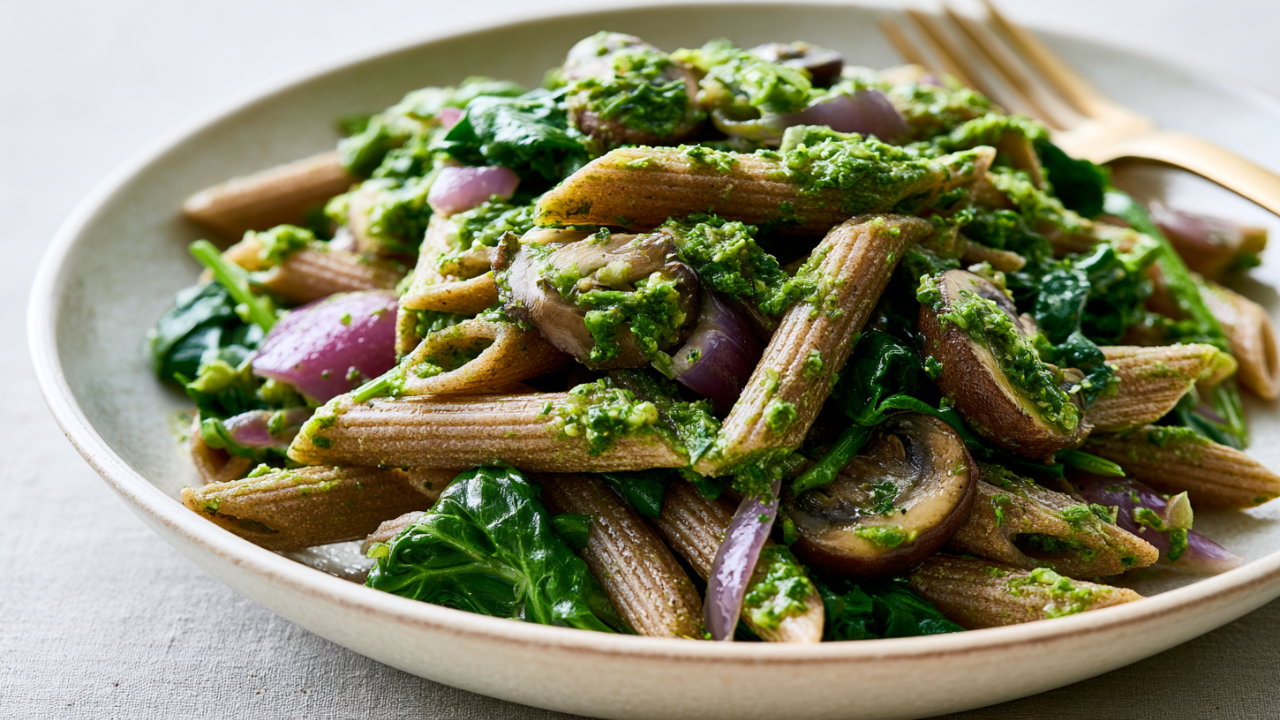
This vibrant pasta dish combines the slow-release carbohydrates and fibre of wholewheat pasta with the antioxidant-rich properties of leafy greens, mushrooms, garlic, herbs, nuts, and extra virgin olive oil. The result is a meal that supports cardiovascular health, metabolic health, gut function, and healthy ageing while delivering exceptional flavour.
Unlike traditional basil pesto, this spinach-based version provides a broader range of micronutrients, carotenoids, and nitrate compounds while maintaining the rich, satisfying texture that makes pesto such a beloved sauce.
Ingredients
- 300g wholewheat penne pasta
- 1 tbsp extra virgin olive oil
- 2 medium red onions, thinly sliced
- 300g chestnut mushrooms, sliced
- 2 garlic cloves, finely chopped
- Sea salt and black pepper
For the Spinach Pesto:
- 150g fresh spinach
- 30g fresh basil leaves
- 50g walnuts
- 50g Parmesan cheese, finely grated
- 2 garlic cloves
- 4 tbsp extra virgin olive oil
- Juice of ½ lemon
- 2–3 tbsp water (if needed)
- Sea salt and black pepper
Method
Bring a large saucepan of salted water to the boil and cook the wholewheat penne according to the packet instructions until al dente.
While the pasta cooks, prepare the pesto. Place the spinach, basil, walnuts, Parmesan, garlic, olive oil, lemon juice, salt, and pepper into a food processor. Blend until smooth, adding a little water if necessary to achieve a silky consistency.
Heat the olive oil in a large frying pan over a medium heat. Add the sliced red onions and cook gently for around 8–10 minutes until softened and lightly caramelised.
Add the mushrooms and continue cooking for a further 6–8 minutes until they release their moisture and begin to brown. Stir through the chopped garlic and cook for one minute more.
Drain the pasta, reserving a splash of the cooking water.
Add the pasta to the mushroom mixture and stir through the spinach pesto. Add a little reserved pasta water if needed to loosen the sauce and help it coat the pasta evenly.
Taste and adjust seasoning before serving.
Why This Dish Is So Good For You
Wholewheat Penne
Wholewheat pasta retains the fibre-rich bran and nutrient-dense germ of the grain, providing substantially more fibre, magnesium, B vitamins, and phytonutrients than refined white pasta.
The higher fibre content helps slow digestion and glucose absorption, supporting more stable blood sugar levels and promoting satiety. Whole grains have consistently been associated with lower risk of cardiovascular disease, type 2 diabetes, and several forms of cancer.
Spinach
Spinach is one of the most nutrient-dense leafy greens available. It provides folate, magnesium, potassium, vitamin K, vitamin C, and carotenoids such as lutein and zeaxanthin.
These compounds help support eye health, cardiovascular health, immune function, and protection against oxidative stress. Spinach is also rich in dietary nitrates, which can enhance nitric oxide production and support healthy blood vessel function.
Mushrooms
Mushrooms contain unique compounds rarely found elsewhere in the diet, including ergothioneine and glutathione, two powerful antioxidants that help protect cells from oxidative damage.
They are also one of the few meaningful dietary sources of ergosterol, a precursor to vitamin D. Their beta-glucans support immune function and gut health, while their savoury umami flavour helps create satisfying meals with relatively few calories.
Red Onion
Red onions provide flavonoids, particularly quercetin, which has demonstrated antioxidant and anti-inflammatory properties.
The sulphur-containing compounds found in onions may support cardiovascular health, immune function, and healthy inflammatory balance. Red onions also contribute prebiotic fibres that nourish beneficial gut bacteria.
Garlic
Garlic contains bioactive sulphur compounds, particularly allicin, which has been extensively studied for its cardiovascular and immune-supportive effects.
Regular garlic consumption has been associated with improvements in blood pressure, vascular function, and markers of cardiometabolic health.
Basil
Basil contains numerous polyphenols and volatile aromatic compounds, including eugenol and rosmarinic acid, both of which exhibit antioxidant and anti-inflammatory properties.
These compounds help protect tissues from oxidative damage and contribute to the herb's characteristic aroma and flavour.
Extra Virgin Olive Oil
Extra virgin olive oil is one of the most researched foods in nutritional medicine. Rich in monounsaturated fats and polyphenols such as oleocanthal, it supports cardiovascular health, healthy inflammatory balance, metabolic function, and longevity.
Oleocanthal has even been shown to exert mild anti-inflammatory effects through mechanisms similar to some anti-inflammatory medications.
Walnuts
Walnuts provide omega-3 fatty acids, particularly alpha-linolenic acid (ALA), alongside polyphenols, vitamin E, magnesium, and fibre.
These compounds support cardiovascular health, brain function, healthy ageing, and inflammatory balance. Walnuts are among the most antioxidant-rich nuts available.
Parmesan Cheese
Parmesan contributes protein, calcium, phosphorus, and flavour. Its strong umami character allows a relatively small amount to deliver significant taste, making it an effective ingredient for enhancing satisfaction and enjoyment.
Interested in nutrition? You'll love this.
New research. Emerging ideas. Fascinating physiology. And a proper look at what the science actually means — without the hype.
Join my newsletter for weekly nutrition research, recipes, articles and insights worth knowing about.