
What Is Insulin Resistance? A Simple Science Based Explanation
Apr 14, 2026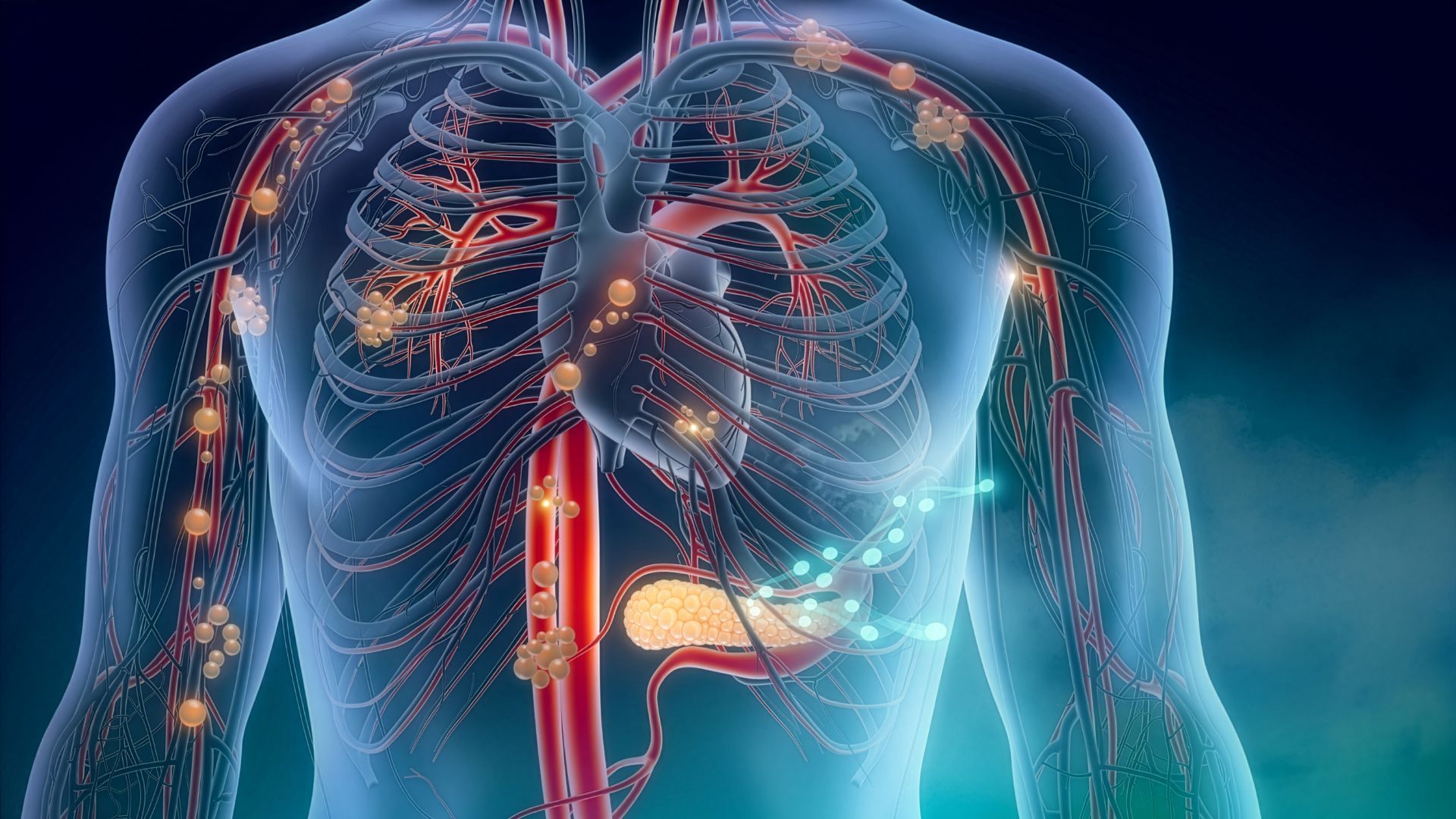
If you’ve spent any time looking into weight gain, fatigue, or metabolic health, you’ve almost certainly come across the term insulin resistance. It gets mentioned a lot. In fact, it’s become one of those phrases that’s used so frequently that it can start to lose meaning.
So what does it actually mean?
To understand insulin resistance properly, we need to start with insulin itself, because without that foundation, the rest of it doesn’t quite land.
Insulin is a hormone produced by the pancreas, and its primary job is to regulate blood glucose. Every time you eat, particularly when carbohydrates are involved, your digestive system breaks those foods down into glucose, which enters the bloodstream. That glucose needs to be moved out of the blood and into cells, where it can be used for energy or stored for later use.
Insulin is the signal that makes that happen.
A useful way to think about it is as a kind of key. It travels through the bloodstream and effectively tells your cells that fuel is available and that they should open up and take it in. In a healthy system, this works very efficiently. Blood sugar rises slightly after a meal, insulin is released, glucose is taken up into cells, and levels return to a steady baseline.
There is a natural rhythm to it. A rise and fall that keeps everything within a relatively tight range.
Insulin resistance is what happens when the cells stop responding to that signal as effectively as they should.
The key is still there, but the lock is no longer working properly.
So what does the body do in response to that?
It compensates.
The pancreas produces more insulin in an attempt to push glucose into the cells. For a period of time, this works. Blood glucose can still be kept within a normal range, but it comes at the cost of higher circulating insulin levels. This is why insulin resistance can be present for quite some time without showing up clearly on standard blood tests.
Under the surface, however, things are beginning to shift.
Because insulin is not just involved in moving glucose into cells. It is also one of the body’s primary regulators of energy storage. When insulin levels rise, the body is being told that energy is available and should be stored. When insulin levels fall, the body regains its ability to access stored energy.
In a metabolically healthy system, there is a constant and flexible shift between these two states. After a meal, insulin rises and energy is stored. Between meals, insulin falls and stored energy can be released and used.
Insulin resistance disrupts that flexibility.
Because insulin levels are elevated more often, and for longer periods, the body spends more time in a state where it is being signalled to store energy and less time in a state where it can access it. Over time, this begins to affect not just blood sugar control, but how the body handles energy more broadly.
This is where many of the downstream effects start to appear.
One of the most common is a gradual increase in body fat, particularly around the abdominal area. This is partly because insulin promotes fat storage, but also because it suppresses the breakdown of stored fat. When insulin is elevated, the body is less able to use its own fat stores as a fuel source.
At the same time, blood sugar regulation becomes less stable. Instead of small, controlled rises and falls, you begin to see larger fluctuations. Blood sugar may rise higher after a meal and then fall more sharply afterwards. These drops can trigger hunger, fatigue, and cravings, particularly for quick sources of energy such as sugar and refined carbohydrates.
So what looks like a behavioural pattern from the outside often has a strong physiological driver underneath it.
Another important piece of the puzzle is how insulin resistance develops in the first place.
This is not something that happens overnight. It tends to develop gradually, often over years, and is influenced by a combination of factors.
Diet plays a significant role, particularly patterns that involve frequent intake of refined carbohydrates and ultra-processed foods. These can lead to repeated spikes in blood glucose, each requiring an insulin response. Over time, the system becomes less responsive.
Physical inactivity also contributes. Muscle tissue is one of the primary sites for glucose uptake, and when it is not being regularly used, the body becomes less efficient at clearing glucose from the bloodstream.
Excess body fat, particularly around the abdomen, can further impair insulin sensitivity through inflammatory signalling, creating a cycle where insulin resistance and fat gain reinforce each other.
Sleep disruption and chronic stress add another layer, influencing hormonal balance and increasing the demand on blood sugar regulation.
When all of these factors come together over time, the system becomes progressively less efficient.
One of the reasons insulin resistance is so often missed is that it doesn’t necessarily produce clear, immediate symptoms. Blood glucose levels may remain within a normal range for quite some time because the body is compensating by producing more insulin.
Meanwhile, people may notice more subtle changes. Energy levels may fluctuate. Cravings may increase. Weight may begin to creep up, particularly around the midsection. Fat loss may become more difficult.
Individually, these changes are easy to dismiss or attribute to other factors. Taken together, they begin to form a pattern.
And that pattern is often the early expression of a system that is no longer regulating energy as efficiently as it should.
The important thing to understand is that insulin resistance sits at the centre of many of the most common metabolic health issues we see today. It is a key driver of type 2 diabetes, but long before that point, it influences body weight, energy levels, appetite, and overall metabolic function.
Understanding it provides a framework for making sense of a wide range of symptoms that might otherwise feel disconnected.
The good news is that insulin resistance is not a fixed state. It is dynamic and responsive to change. With the right interventions, it can be improved, and in many cases significantly reversed.
But that begins with understanding what it is, how it develops, and how it affects the body.
Once that understanding is in place, the next step is recognising how it shows up in day-to-day life, often in ways that are easy to overlook.
Like nutrition? You'll probably love this.
New research. Emerging ideas. Fascinating physiology. And a proper look at what the science actually means — without the hype.
Join my newsletter for weekly nutrition research, recipes, articles and insights worth knowing about.
We hate SPAM. We will never sell your information, for any reason.